
German Baby Names: Our Pick for Girls and Boys (Origin and Meaning)
There's this moment, somewhere between the second trimester and the packed hospital bag, when you start saying names out loud in the living room. You try them on, you let them roll around, you glance at your partner hoping for that little spark. And every so often, a German name slips into the list and simply refuses to leave. That's no accident: German names have a way of being solid and tender in the same breath, a sound that stands on its own two feet.
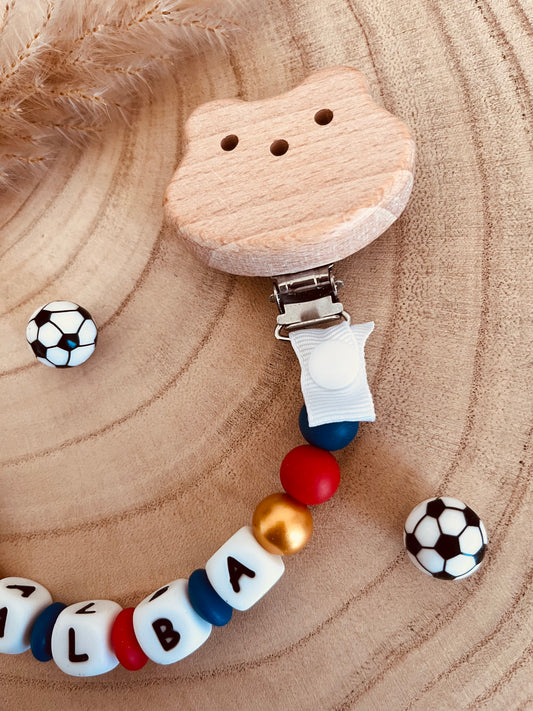
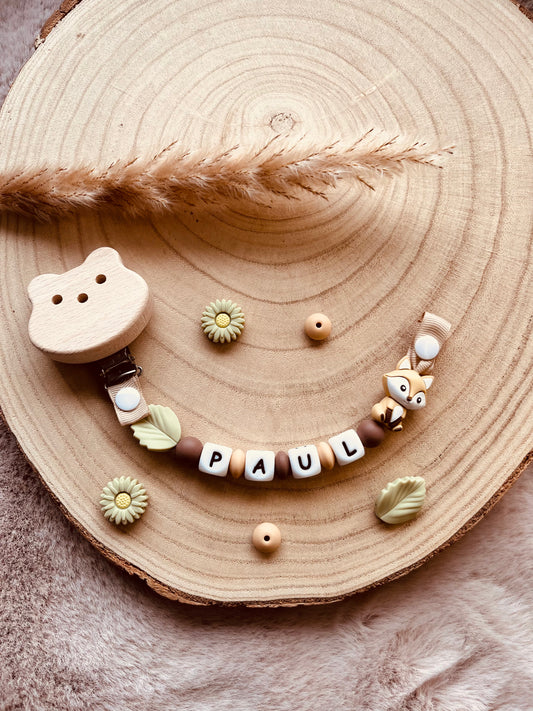
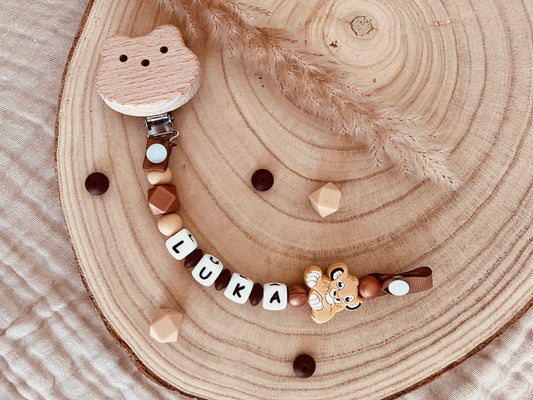
At Babanono, we see a lot of names go by — stitched and beaded onto the pacifier clips and gift sets we personalise every week. So we felt like taking you on a little trip to Germany, through forests, fairy tales and the softness of its nicknames. Here is our selection of German baby names for girls and boys, with the origin and meaning behind each one.
Why German names win parents over
The first thing that strikes you is that double nature. A German name can be rugged and gentle in the same breath. Frieda speaks of peace yet has a lovely snap to it; Karl lays down a plain, honest foundation without ever feeling harsh. That balance is exactly what we go looking for, often without putting it into words.
Then there's the richness of meaning. Most of these names come from Old Germanic and are built like little coats of arms: a word for battle, a word for protection, a word for peace. You're not just handing your child a sound — you're tucking an intention inside it. And then come the nicknames, that very German tenderness of the affectionate suffix — Fritz for Friedrich, Heinz for Heinrich — turning a slightly solemn name into a little pet name to cuddle.
One last, very practical thing: the current trend in Germany leans towards short, bright names. Theo, Leo, Emil, Ida and Ella top the birth charts. Good news if you're after a name that's easy to carry… and easy to spell out letter by letter in silicone alphabet beads on a pacifier clip, without it looping three times around the cord.
German names for girls: origin and meaning
Let's start with the girls, with names that range from quiet little peace to unmistakable nobility.
- Emma — probably the most universal on the list, and for good reason: from the Germanic root ermen, it means "the great, the universal one." A name that has crossed borders without ageing a day.
- Frieda (or Frida) — from friede, "peace." It's hard to imagine a gentler promise for a newborn. Very much back in fashion for its cheeky, vintage air.
- Mathilde (Mathilda) — from maht, strength, and hild, battle: "the mighty one." A name fit for a queen and a warrior, while keeping a real elegance.
- Ida — short, round, bright. It comes from id, meaning drive and hard work. It's exactly the kind of short name German families are falling for right now.
- Heidi — the affectionate form of Adelheid, built on adal, "noble." Literally "of noble nature." Impossible to say it without picturing alpine meadows, and that's just as it should be.
- Adele (Adeline) — that same adal root: "the noble one." A classic making a strong comeback, carried by its airy sound.
- Emilia — among the most-given names in Germany in recent years. You can hear valour and dedication in it; a safe bet, tender and solid at once.
- Mina — short for Wilhelmina, "the resolute protector." Two syllables, plenty of character.
- Greta — the short form of Margarethe. Originally it evokes a pearl; in Germany it has taken on that slightly vintage, self-assured charm we know it for today.
- Lena — a luminous shortening of names like Magdalena or Helena. Easy to carry anywhere, soft on the ear, a name the whole family agrees on.
German names for boys: origin and meaning
On the boys' side, we dive into Old Germanic — the tongue of kings, forests and virtues. Many of these names have an English cousin you'll spot along the way.
- Karl (Carl) — from karl, "the free man." It's the German Charles, direct and no-nonsense, back in fashion for that very frankness.
- Wilhelm — willo, will, and helm, helmet, protection: "the resolute protector." Our William, in a more chiselled version. Its nickname Willi is adorable.
- Friedrich — friede, peace, and rihhi, powerful: "the prince of peace." A grand name that softens gently into Fritz for everyday life.
- Ludwig — hlut, glorious, and wig, battle: "the glorious warrior." It's the German Louis — Beethoven's own, no less.
- Heinrich — haim, home, and rihhi, powerful: "the master of the house." Our Henry, with a tender little Heinz held in reserve.
- Otto — short, symmetrical, impossible to forget. It comes from od, "wealth, inheritance." An emperor's name that somehow feels as cuddly as a teddy.
- Bruno — from brun, which meant both the colour brown and a suit of armour. Sturdy and warm, it crosses borders effortlessly.
- Konrad — kuoni, bold, and rat, counsel: "the bold counsellor." Our Conrad, a name for a wise head and a leader.
- Bernhard — bern, bear, and hart, strong: "strong as a bear." Hard to find anything more reassuring for a little chap. English form: Bernard.
- Leonard — "strong as a lion." Everywhere today through its short forms Leo and Lenny, which are conquering German maternity wards.
Teddies, fairy tales and forests: the imagery behind these names
We never quite choose a name by chance. Behind German names lies a whole reassuring imagery: the Brothers Grimm fairy tales, wooden houses at the forest's edge, evenings by the fire and lullabies. Maybe that's why they ring so true to a parent-to-be — they carry an idea of shelter inside them.
You'll also notice a real logic in the way they're built. Peace (friede) turns up in Frieda as it does in Friedrich. Nobility (adal) links Adele and Heidi. A protective strength runs through Mina, Wilhelm and Bernhard. Choosing from this family of names is a little like choosing a dominant colour for the early years: gentleness, courage, calm. Nothing is set in stone, of course — but it's a lovely wink to slip into a name.
And if Germany has whetted your appetite for northern sounds, take a detour through our Scandinavian baby names: the same love of nature and rugged softness, with an extra breath of fresh air.
How to choose the right German name for your baby
A name needs testing. Say it in full, with the surname, on a morning when everyone's in a rush — that's the real stress test. Call it out loud as if your child were playing at the far end of the garden. Listen to the nickname it naturally produces, because that's often the one you'll use most in the first three years.
Think too about everyday life: a German name wears beautifully, as long as you check it's said without hesitation by the people around you. Frieda, Emma, Leo and Bruno roll off the tongue; others may take a little getting used to, and that's perfectly charming too.
Finally, once the name is found — that moment when you look at each other in silence because you just know — the urge to make it real usually takes over. To see it written, to hold it in your hands. A personalised newborn gift set to match their name does exactly that: it turns those few long-debated letters into a first real gift. And trust us, the first time you read your baby's name beaded and stitched just for them, that little living-room spark comes rushing straight back.
In short
From girls' names full of noble softness — Emma, Frieda, Mathilde, Ida, Heidi — to boys' names carved from Old Germanic — Karl, Wilhelm, Ludwig, Bruno, Otto — German names offer that rare blend of quiet strength and tenderness. Take your time, say them out loud, let one settle in. You'll know. And when you do, we'll be here to write it, letter by letter, on your baby's very first treasure.